
What Is the Ideal Material for a Cutting Board
A cutting board is one of those kitchen essentials you’ll reach for almost every day. But these days, it can do more than provide a surface for food preparation. Wooden options can add a rustic touch to a serving spread, while marble and other decorative designs can make an attractive backdrop for presenting food. Some are even used as props in food photography, making appearance just as important as practicality for certain buyers.
If you need a utensil for much more than chopping vegetables or slicing ingredients, choose a versatile cutting board. Look for a design that can move easily between food preparation, serving, and presentation. You can use it to prepare ingredients, arrange cheese and appetisers, or create an attractive backdrop for food photography. There are many materials to choose from, including natural wood, bamboo, practical plastic, and decorative glass. I’ll explore the main options and what to consider when choosing one for your kitchen.
Marble: For Serving and Presentation
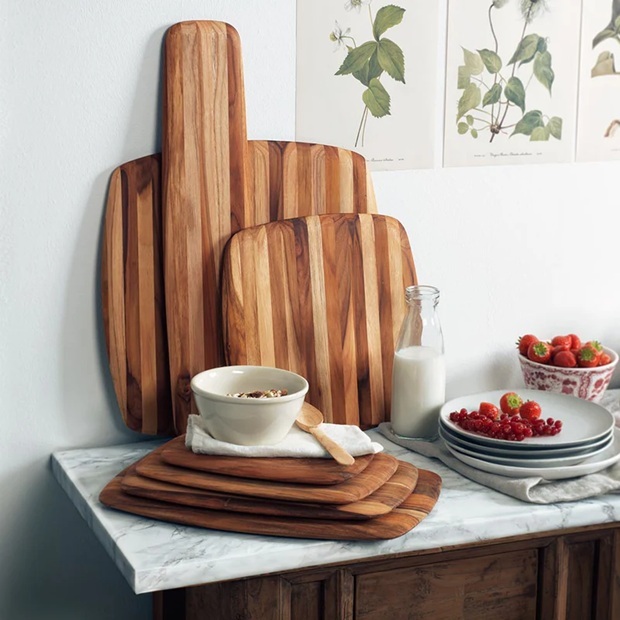
What’s the best material for a kitchen cutting board? If you want something that looks as good as it performs, marble is an appealing option. Its smooth, polished appearance gives it a more decorative feel than many everyday chopping surfaces, so it can easily go from food preparation to the dining table when you’re entertaining. There are several reasons to consider marble:
- Durable: Marble is a strong material that can withstand regular kitchen use and resist everyday wear and damage.
- Non-porous: Its non-porous surface doesn’t readily absorb liquids, making it a practical choice for food preparation and relatively straightforward to clean.
- Great for serving: A marble surface can look beautiful when you’re arranging appetisers, desserts, cheese or other foods for guests. It can also make an attractive background for food photography.
- Useful for baking: The cool, smooth surface is handy when you’re rolling, kneading, or flattening dough, giving you another reason to keep one on hand beyond chopping.
Marble does have a more refined look, but that doesn’t mean it has to stay tucked away for special occasions. Its combination of practicality and presentation makes it a versatile addition to a kitchen.
Plastic: For Easy Cleaning and Food Prep
If convenience is high on your list, consider a plastic cutting board. Its non-porous surface doesn’t readily absorb liquids, which makes it useful for preparing foods such as meat and fish. Any juices stay on the surface rather than soaking into the material, making it easier to clean afterwards. Another advantage is the flexibility of cleaning. Depending on the manufacturer’s instructions, plastic boards can generally be washed with soap and water or suitable disinfecting products, and many are also dishwasher safe. They are available in a wide range of colours, which can be useful if you like to keep different boards for different types of food and reduce the risk of cross-contamination.
There’s one important drawback to keep in mind. Knives can leave cuts and grooves in plastic over time, and these marks become more noticeable with regular use. Deep or numerous scratches can make the surface harder to clean thoroughly. If the board has become noticeably rough or heavily marked, consider replacing it rather than continuing to use it.
Wood: For Knife-Friendly Chopping
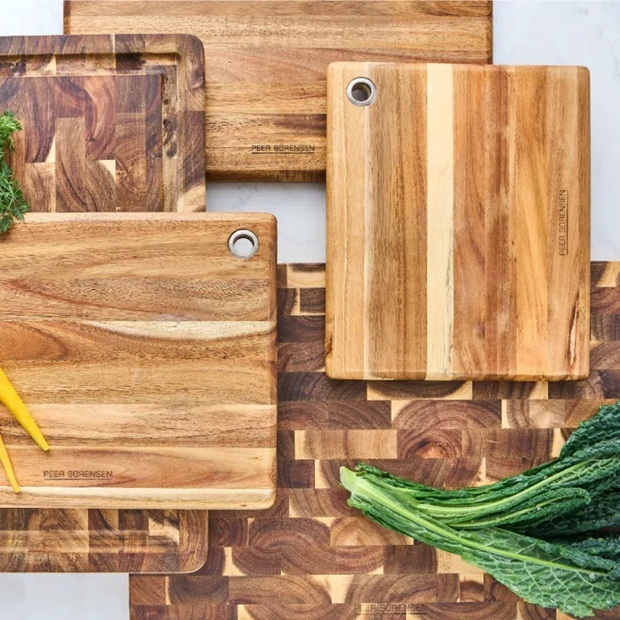
Wood cutting boards remain a popular choice for food preparation, and it’s easy to see why. A well-made wooden board has a warm, natural look that works just as well on the dining table as on the kitchen bench. It can also be gentler on knife edges than harder surfaces, helping your blades stay sharper with regular use. The natural properties of wood, including compounds such as tannins, can also offer some antimicrobial benefits. Minor knife marks may become less noticeable as the wood fibres settle back into place. Another reason to choose wood is its versatility. Beyond chopping and preparing ingredients, it can double as a serving surface or add a rustic touch to food photography and presentation.
Wood does need a little more care than some other materials, though. Avoid putting it in the dishwasher or leaving it submerged in water, as prolonged moisture can cause the material to swell, warp, or crack. Excessive heat and harsh detergents can also damage the surface over time.
Bamboo: For Sustainability
Bamboo grows much faster than many hardwood trees, with some varieties able to regenerate within a few years. This makes it an appealing choice for those seeking more renewable material. Some of the reasons to consider bamboo include:
-Strong and durable: Its density gives it a sturdy feel like many wooden options.
-Knife-friendly: The surface isn’t particularly abrasive; it can be gentler on knife edges.
-Naturally antimicrobial: Bamboo has natural properties that can help limit microbial growth.
-Long-lasting: Minor knife marks can become less noticeable as the fibres settle over time.
Like wood, bamboo needs a little care. Avoid putting it in the dishwasher or leaving it submerged in water for extended periods, as excess moisture can damage the material.
Bottom Line
Choosing the right cutting board online comes down to how you plan to use it. Marble can add a stylish touch to serving, plastic is handy for everyday preparation, while wood and bamboo bring a more natural feel. Think about your cooking habits, cleaning preferences, and how you want to use your board, then choose the option that fits your kitchen best.

